The Story of a Large Family
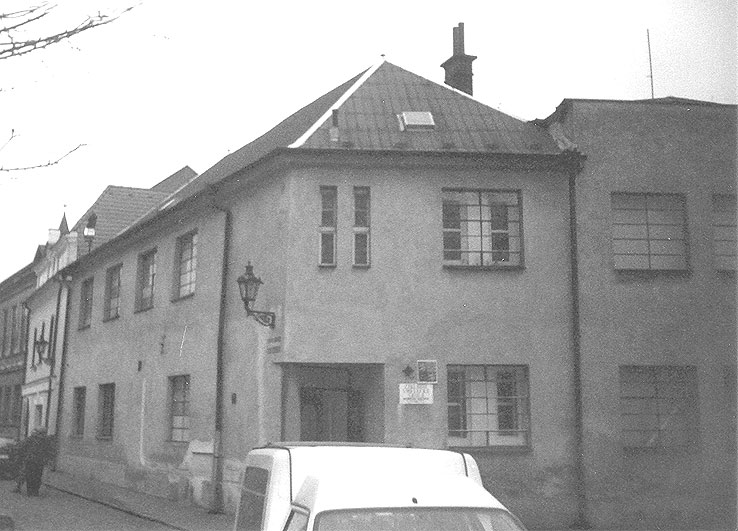
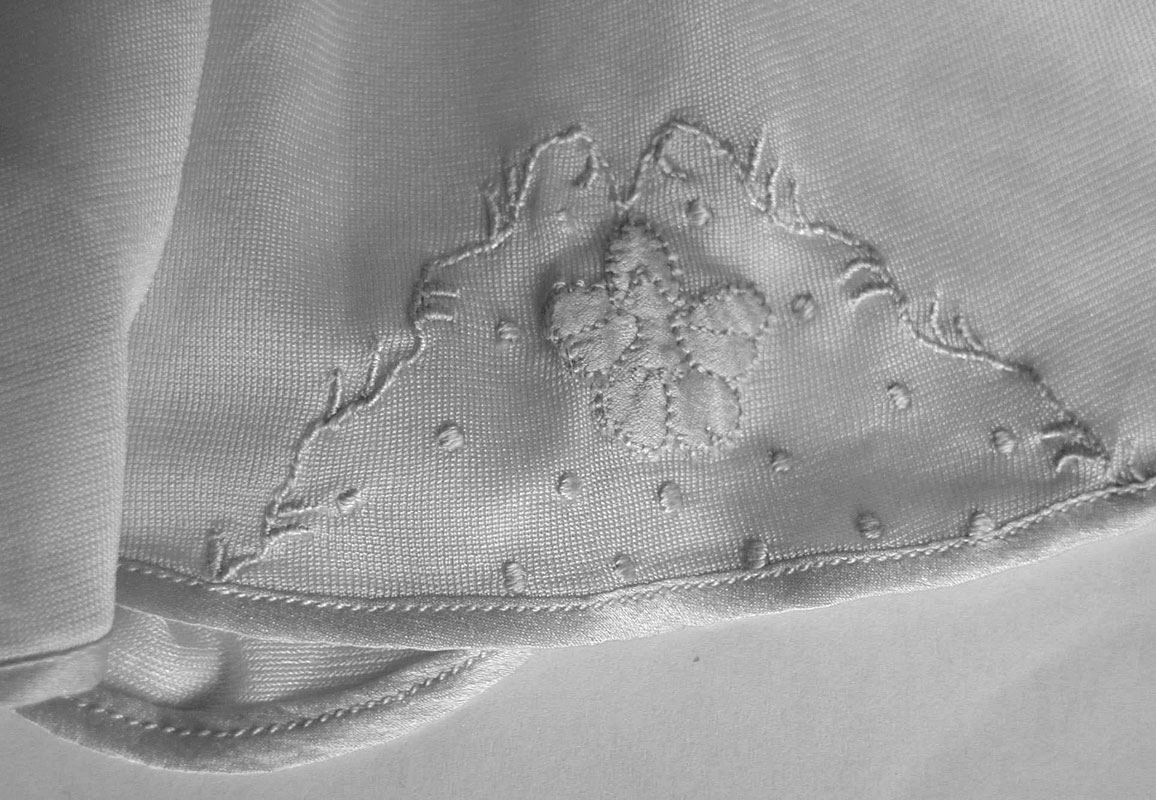
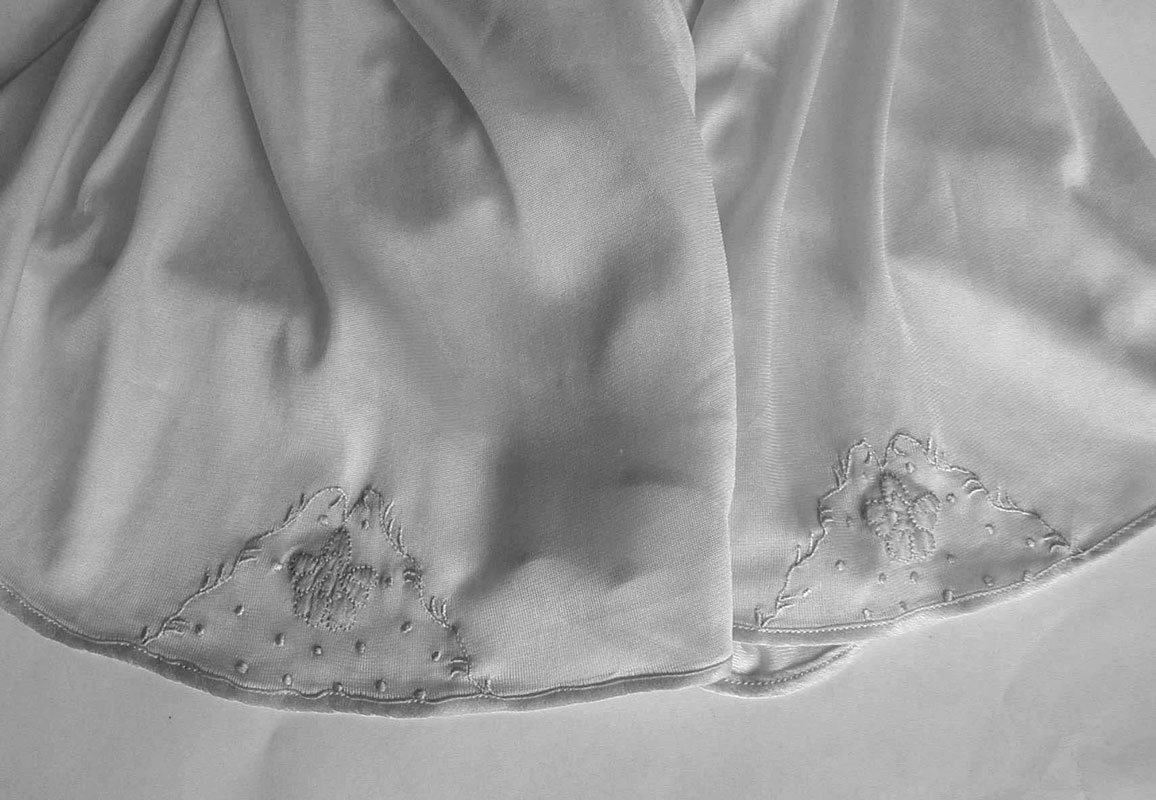
Mr. Leopold Eisner (born on 29th December, 1883) and his brother Edvard/Eduard (born on 9th March, 1882) owned a small factory, located at 142, B. Němcová Street, where the Bedřich Smetana Arts School is today. The firm´s name was LINELA. It produced bedspreads and luxury silk lingerie, which was embroided by hand. On the ground floor, there were offices and the dispatch office and on the first floor there was a large workshop with a "factory" window. The girls employed there used to open the window when the weather was nice and call out to the tailor, Mr. Famfulík. He had put his sewing machine by the window opposite them so he could sing to them. His wife had a shop in today's Smetana Square. She made and sold hats there. When there was not enough work, she earned some extra money by working at LINELA.
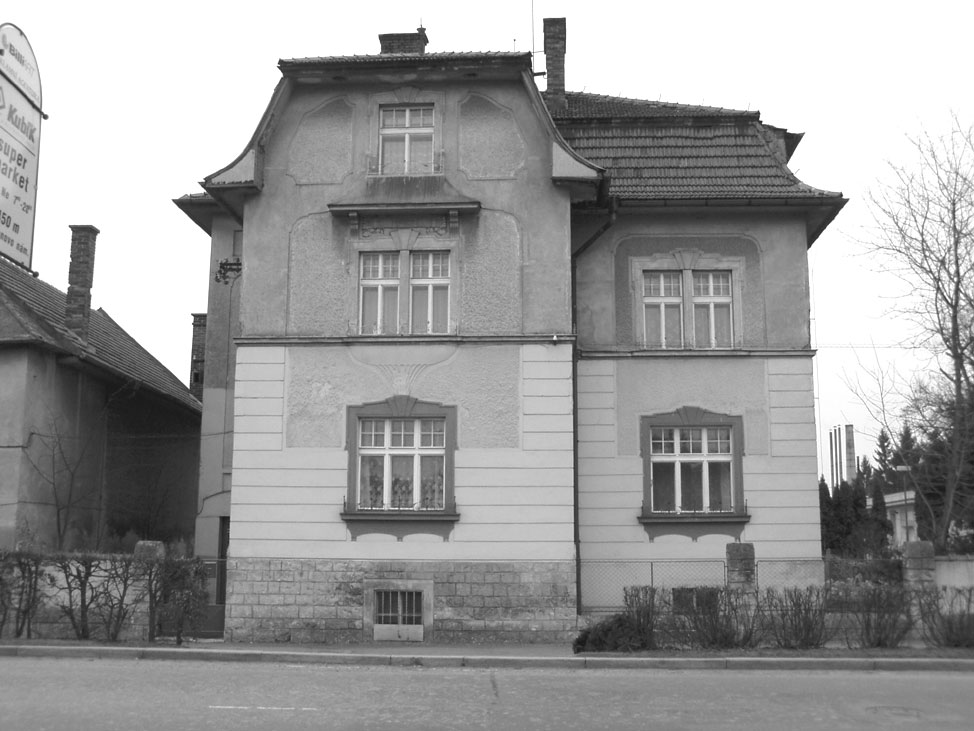
Leopold lived with his wife and daughters Věra (born on 6th July, 1918 and Květa/Flora (born on 6th January, 1923) in a house at today´s 563, Mařákova Street. Věra took her school-leaving exam at the grammar school in Litomyšl in the 1936-1937 school year.
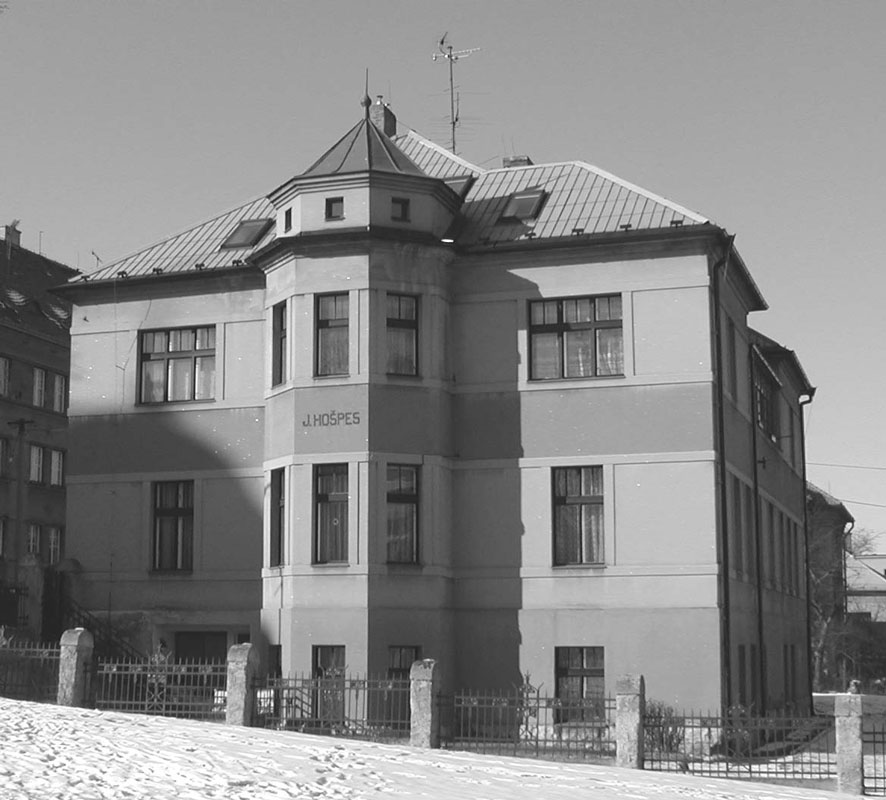
Edvard had a daughter Eva (born on 26th December, 1926) and a son Pavel (born on 18th September, 1929). They moved to Litomyšl from Skuteč in about 1930. They lived in a rented flat on the first floor in the so-called "Hošpes´s villa" at today's 653, T.G. Masaryk Street. They had a carpet and luxurious white furniture.
Eva had a lot of beautiful curly hair, which she wore loose. She was quite sporty and she swam very well. Eyewitnesses describe her as sincere, nice and friendly. She attended the girls' school and the grammar school for a short time (for the first grade and part of the second grade). After class, she used to drop in on her parents at LINELA.
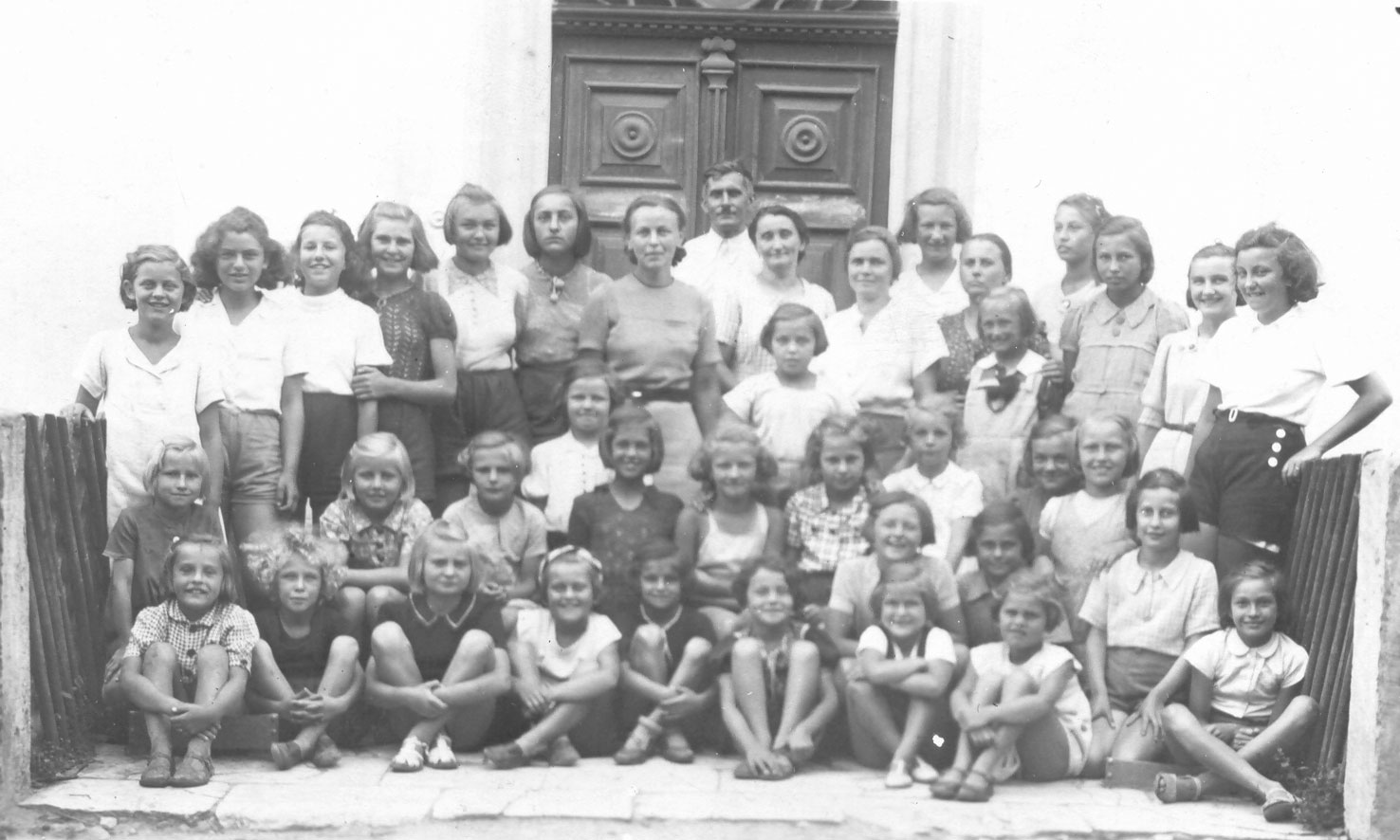
She spent her free time in Špitálek, where she played with her friend Irena Famfuléková (whose married name was Mělnická). They played marbles or tag or sat on the shop-window sill in the Sladkus´shop, talking. Sometimes Jirka Sladkus went round and joined them. In about 1937 (38) she went with Eva and Irena to Scout camp in Sebranice. The girls stayed in school classrooms. Pallets laid on the floor were their beds.
Once, when Sokol gave a party, Eva came dressed in a beautiful Piešťany outfit, which was probably tailor-made.
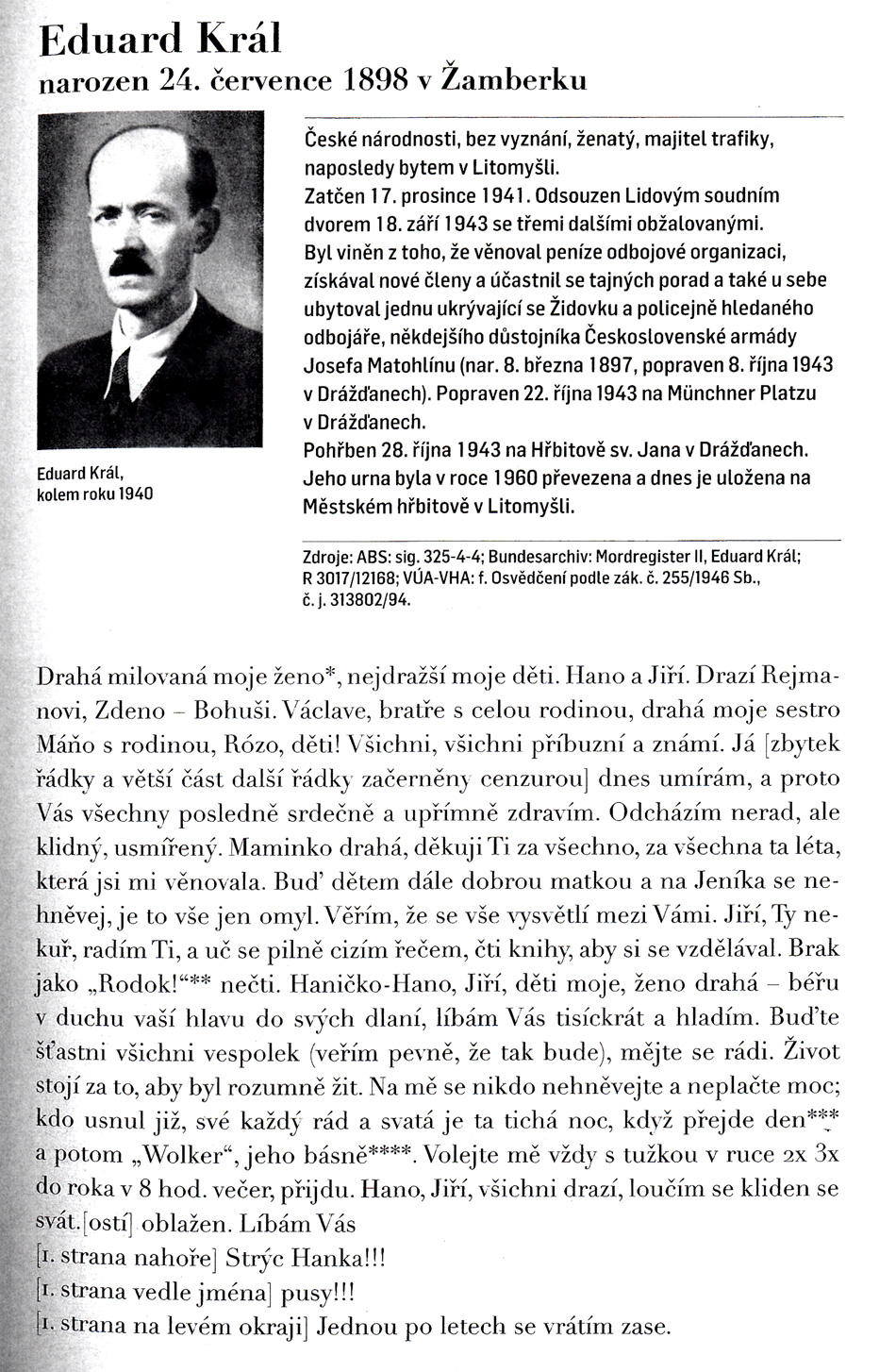
Leopold Eisner was arrested during the Heydrich Terror. This arrest was related to the fate of Eduard Král, the owner of a newsstand, around whom a anti-communist resistance was forming in Litomyšl. Someone reported the Královy couple that they were hiding an officer of the former Czechoslovak Army in their house at No. 129 on today's Smetana Square. The Gestapo raided the Královy's home on December 17, 1941. They did not find the unregistered resident, but what they did find was a list of people who had contributed to the cash register downstairs in the shop, from which money was sent to support the families of arrested resistance fighters. As a result of the raid, Eduard Král, and a few days later his wife Anna as well, were arrested and taken to the Pardubice prison; after which a terrifying chain of events followed.
Leopold Eisner had visited the Freys during this tense time and confided in them that his name was on the newsstand list and that in addition he had even given Mr. Král all the family's valuables. The Germans gradually arrested the people on the list and immediately executed them. Leopold Eisner was also arrested. He was executed in Pardubice on June 10, 1942.
Edvard, Flora, Věra, Eva, and Pavel left Litomyšl on transport for Pardubice on 2nd December, 1942 and they were sent to Terezín on 5th December. On 23rd January, 1943, they were put on Cr transport and sent to Auschwitz (Edvard with the no. 1202, Flora 1195 and Eva 1204. We do not know Věra´s and Pavel´s numbers). They all died at Auschwitz.
Among the people deported from Litomyšl on 2nd December, 1942 were Salomon Eisner (born on 5th February, 1855), Berta Eisnerová (born on 25th February, 1881), Blažena Eisnerová (born on 1st April, 1886), Helena Eisnerová (born on 6th February, 1895), Josef Eisner (born on 25th March, 1910) and the doctor Richard Eisner (born on 22nd July, 1914). We did not manage to find out their relationship to the families of Leopold and Edvard. Salomon died at Terezín on 20th November, 1943 and Berta was sent there on the so-called September Dm transport on 6th September, 1943 (with the number 3493). Blažena, Helena and Richard were sent to Auschwitz on 23rd January, 1943 and Josef on 18th December, 1943. None of them survived.
Dagmar Burdová, Tereza Jandáčková, Markéta Zrůbková
Additions to the story added in June 2025 by Dagmar Burdová
Information from Ing. Jiří Šimek, grandson of Eduard Král:
Eduard Král was accused of donating money to a resistance organization, recruiting new members for it, housing a hiding Jewish woman and Josef Matohlín, a resistance fighter and officer wanted by the police. The People's Court sentenced him to the maximum sentence on September 18, 1943. Eduard Král was executed in Dresden on October 22, 1943. His urn was transported to Litomyšl in 1960 and placed in the local cemetery.
Anna Králová, tried in the same trial as her husband's accomplice, heard the death sentence three times, which was eventually abated to ten years in prison. She spent the end of the war in the Kolbermoor penal camp. She died in Litomyšl on July 6, 1974.
Czechoslovak Army officer Josef Matohlína was discovered in a Litomyšl hideout, arrested and executed on October 8, 1943 in Dresden.
Archive materials
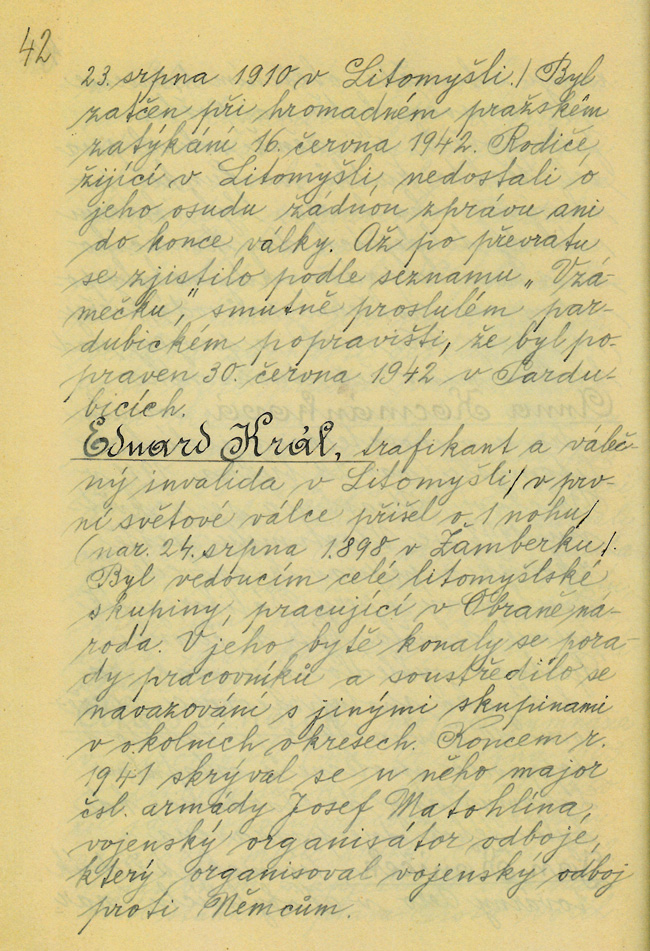
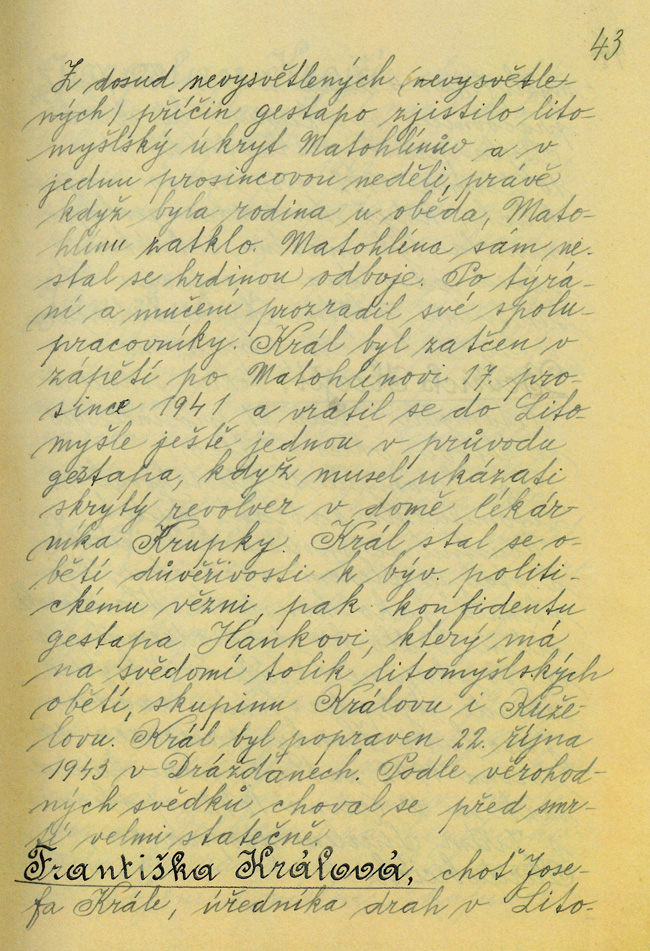
Source: Státní okresní archiv Svitavy se sídlem v Litomyšli, mezifondový soubor kronik, př. č. 118 - Kronika města Litomyšle VIII, 1938-1945, sign. KR28, fol. 42-43
Eduard Král (born 24th August 1898 in Žamberk), a tobacconist and an invalid veteran, who lost his leg in World War I, was the leader of the Litomyšl group working in Obrana národa (Defence of the Nation). It was in his flat, where the meetings of his group as well as those from the near-by villages took place. At the end of 1941, major Matohlína of the Czechoslovak Army, a military organiser of the resistance against Germans, was hiding at his place. It is still unclear, how the Gestapo managed to discover Matohlína´s hiding place, but on one December Sunday, just as the family set down to lunch, they appeared to arrest Matohlína. The major himself did not become a hero of the resistance as he gave away his collaborators after being tortured. Král was arrested shortly after Matohlína, on 17th December 1941. The next time he returned to Litomyšl, he was accompanied by the Gestapo, seeking a revolver hidden in the house of the pharmacist Krupka. Král so became another victim of his credulity to an ex-political prisoner and later a Gestapo informer Hanka, who is to blame for the deaths of so many, including the Král´s and Kužela´s groups. Král was executed on 22nd October 1943 in Dresden. According to reliable witnesses, he acted brave before his death.